Awedio.sg is now part of the SPH Media website.
Awedio.sg is now part of the SPH Media website.
Awedio.sg is now part of the SPH Media website.
Home
Stations
Podcasts
Videos
Home
Stations
Podcasts
Videos
Green Pulse
Audrey Tan
The Straits Times
News & Current affairs
S3E5: Singapore’s beverage container return scheme has been battered with criticisms. Why do we need it?
· 34m 04s
The Straits Times analyses the beat of the changing environment, from biodiversity conservation to climate change.
Episodes
3 Nov 2026
S3E5: Singapore’s beverage container return scheme has been battered with criticisms. Why do we need it?
The scheme could help to improve Singapore’s low domestic recycling rates. Blue recycling bins filled with non-recyclable trash have become a common sight around Singapore. This contamination has resulted in poor domestic recycling rates in the country, as food and liquid waste thrown into the commingled bins taints the other recyclables. In 2025, the Republic logged its highest amount of waste disposed of, at about 3.36 million tonnes, up from about 3.33 million tonnes in 2024. This is in tandem with economic and population growth, according to the National Environment Agency (NEA). To overcome this challenge, the National Environment Agency on Oct 1 fully implemented its Beverage Container Return Scheme (BCRS) to ensure that plastic bottles and cans are segregated for recycling. But this initiative has also been plagued with complaints. In this episode, host Audrey Tan chats with Ang Qing and Shabana Begum, environment correspondents at ST, on whether these criticisms are warranted, and whether Singapore should continue pushing ahead with the scheme. Highlights (click/tap above): 2:31 Observations on the ground 6:00 Why we need this 10-cent incentive at this stage? 7:55 Why Singapore needs this scheme now 9:11 Why the blue bin scheme is not sustainable given poorer habits in Singapore 11:05 Why BCRS is worth persevering with 13:00 Observations of current and various recycling operations in Singapore 13:56 Not ideal conditions: Seeing discarded syringes among recyclables 15:35 Shabana on the more automated processes at a BCRS recycling facility 17:25 Qing on the need for the public to sort better upstream 18:25 Behind-the-scenes additional costs that SME retailers face 23:25 Is 10 cents enough of an incentive for the public? 25:35 Should more drinks such as glass bottles be worked into BCRS scheme? 26:15 Dumpster diving? Side hustles using the BCRS scheme? Read more: Shabana Begum’s articles: https://str.sg/5EGd Ang Qing’s articles: https://str.sg/i5gT Follow Audrey Tan on LinkedIn: https://str.sg/848W Read her articles: https://str.sg/JLM2 Host: Audrey Tan (audreyt@sph.com.sg) Produced and edited by: Hadyu Rahim Executive producer: Ernest Luis Follow Green Pulse Podcast every Tuesday as we discuss how environmental issues intersect with business, politics and society: Channel: https://str.sg/JWaf Apple Podcasts: https://str.sg/JWaY Spotify: https://str.sg/JWag YouTube: https://str.sg/fapS Feedback to: podcast@sph.com.sg --- Follow more ST podcast channels: All-in-one ST Podcasts channel: https://str.sg/wvz7 Get more updates: http://str.sg/stpodcasts --- Get The Straits Times app, which has a dedicated podcast player section: The App Store: https://str.sg/icyB Google Play: https://str.sg/icyX #greenpulseSee omnystudio.com/listener for privacy information.
Share
34m 04s
27 Oct 2026
S3E4: Is the ASEAN chairmanship that powerful? Can Singapore push the green agenda?
Can Singapore balance economic survival & climate action as ASEAN chair in 2027? As Singapore prepares to take over the ASEAN chairmanship in 2027, the region faces a delicate balancing act between economic uncertainties and climate action. According to recent regional survey data from the ISEAS-Yusof Ishak Institute, many in Southeast Asia are prioritising economic survival, inflation, and recession fears over climate action. But with pressing issues like transboundary haze, coal phase-outs, and rising energy costs, how can Singapore use its leadership to align economic resilience with green initiatives? In this episode, Green Pulse host Audrey Tan sits down with veteran diplomat and climate researcher Sharon Seah. They explore the real power and limits of the ASEAN chair, how the long-awaited ASEAN Power Grid could unlock regional energy security, and why framing climate solutions around economic survival, such as carbon credits and peatland restoration, is the key to uniting the region. Highlights of conversation (click/tap above): 1:03 The power and limits of the ASEAN chair 2:55 When cutting emissions becomes crossing a red line 4:05 How can Singapore as ASEAN chair balance economy and climate change issues 6:21 Singapore as a technocratic chair v consensus builder 8:13 Can ASEAN cooperate on haze issues? 12:17 Unlocking carbon credits through peatland conservation 15:59 Economy and climate change - can ASEAN 2027 balance both? 17:36 ASEAN power grid, microgrid and financing hurdles 22:43 Plans to adapt to climate change 26:02 Impacts of Iran war and Trump at ASEAN in Nov 2026 31:40 Could ASEAN negotiate as a unified voice at COP? 33:10 Why everyday citizens should care about ASEAN Summits Follow Audrey Tan on LinkedIn: https://str.sg/848W Read her articles: https://str.sg/JLM2 Host: Audrey Tan (audreyt@sph.com.sg) Produced and edited by: Hadyu Rahim Executive producer: Lynda Hong Follow Green Pulse Podcast every Tuesday as we discuss how environmental issues intersect with business, politics and society: Channel: https://str.sg/JWaf Apple Podcasts: https://str.sg/JWaY Spotify: https://str.sg/JWag YouTube: https://str.sg/fapS Feedback to: podcast@sph.com.sg --- Follow more ST podcast channels: All-in-one ST Podcasts channel: https://str.sg/wvz7 Get more updates: http://str.sg/stpodcasts --- Get The Straits Times app, which has a dedicated podcast player section: The App Store: https://str.sg/icyB Google Play: https://str.sg/icyX --- #greenpulseSee omnystudio.com/listener for privacy information.
Share
34m 29s
20 Oct 2026
S3E3: What if Singapore had a nuclear reactor, where’d it be?
They offer more safety features and generate less nuclear waste, says a nuclear expert. Singapore announced in May 2026 that it will be embarking on the first phase of a review by the UN atomic watchdog, to help Singapore determine if it has what it takes to deploy nuclear energy. Host Audrey Tan discusses what this process entails for Singapore with Low Xin Wei, the chief executive of the Singapore Nuclear Research and Safety Institute (SNRSI), a research organisation. He was previously the assistant chief executive at Singapore’s energy regulator, the Energy Market Authority. Low describes the review process as being similar to a marriage counselling course, which participants undergo to learn more about what marriage entails. Just like how the final decision on whether to get married will be determined by the couple, countries will have the final say in whether to go ahead with deploying nuclear energy. Highlights (click/tap above): 1:20 How has Singapore’s stance on nuclear energy changed over the years? 6:45 What are the three reasons behind this change? 12:21 How has public perception of nuclear shifted? 15:20 How nuclear energy can boost energy security 20:25 Embarking on Phase 1 of the integrated nuclear infrastructure review: What it entails for Singapore? 26:45 What will it take to demonstrate that nuclear plants are safer than what people perceive? 36:45 Where could a nuclear power plant in Singapore potentially be sited? Read more: S’pore to undergo review by UN atomic watchdog in 2027: https://str.sg/M6Du Follow Audrey Tan on LinkedIn: https://str.sg/848W Read her articles: https://str.sg/JLM2 Host: Audrey Tan (audreyt@sph.com.sg) Produced and edited by: Hadyu Rahim Executive producer: Ernest Luis Follow Green Pulse Podcast every Tuesday as we discuss how environmental issues intersect with business, politics and society: Channel: https://str.sg/JWaf Apple Podcasts: https://str.sg/JWaY Spotify: https://str.sg/JWag YouTube: https://str.sg/fapS Feedback to: podcast@sph.com.sg --- Follow more ST podcast channels: All-in-one ST Podcasts channel: https://str.sg/wvz7 Get more updates: http://str.sg/stpodcasts --- Get The Straits Times app, which has a dedicated podcast player section: The App Store: https://str.sg/icyB Google Play: https://str.sg/icyX --- #greenpulseSee omnystudio.com/listener for privacy information.
Share
43m 41s
13 Oct 2026
S3E2: Haze and a Godzilla El Nino: How is Singapore preparing?
Singapore is also testing out solutions to tackle heat without air-conditioning. After three years of clear skies, the haze is back in Singapore. One contributor to the pollution is the El Nino weather phenomenon, which causes drier, hotter weather in South-east Asia. This causes fires typical of Indonesia’s agroforestry landscape to burn harder and longer. So how is Singapore responding to the double whammy of haze and hotter weather? Green Pulse host Audrey Tan talks to correspondents Shabana Begum and Ang Qing on what they have observed while reporting on these conditions. Highlights (click/tap above): 2:13 The impacts of El Nino in South-east Asia 7:39 How people in Singapore are responding to the heat and haze 13:50 Are people in Singapore heat-tolerant or heat-avoidant? 15:53 Solutions to help people adapt to heat without air-conditioning 20:24 What are the global impacts of El Nino? Read Qing’s and Shabana’s related articles: Solar-powered air-con, freeze-tech and ‘fan-jakketos’ among innovative cooling gadgets on the market: https://str.sg/b6WC Emergency visits for respiratory cases up even with small spikes in PM2.5 levels: S’pore study: https://str.sg/mVPv Follow Audrey Tan on LinkedIn: https://str.sg/848W Read her articles: https://str.sg/JLM2 Host: Audrey Tan (audreyt@sph.com.sg) Produced and edited by: Hadyu Rahim Executive producer: Ernest Luis Follow Green Pulse Podcast every Tuesday as we discuss how environmental issues intersect with business, politics and society: Channel: https://str.sg/JWaf Apple Podcasts: https://str.sg/JWaY Spotify: https://str.sg/JWag YouTube: https://str.sg/fapS Feedback to: podcast@sph.com.sg --- Follow more ST podcast channels: All-in-one ST Podcasts channel: https://str.sg/wvz7 Get more updates: http://str.sg/stpodcasts --- Get The Straits Times app, which has a dedicated podcast player section: The App Store: https://str.sg/icyB Google Play: https://str.sg/icyX --- #greenpulseSee omnystudio.com/listener for privacy information.
Share
31m 07s
6 Oct 2026
S3E1: Singaporeans arguing over land use is good, but ugly extremes must be avoided
Conservationists must make their pro-nature arguments to the mainstream, says ST’s Bhavan Jaipagras. Synopsis: Every Tuesday, we discuss how environmental issues intersect with business, politics and society. Recent announcements about new developments coming at the expense of nature areas in Singapore have reignited the perennial ‘conserve versus develop’ debate. Such discussions were first sparked when housing plans for the Gillman and Maju estates, on which secondary forests have grown, were revealed in July. In August, plans for a new western island – built by reclaiming several of Singapore’s southern islands – generated further discussion on the issue. Host Audrey Tan discusses with ST’s senior columnist Bhavan Jaipragas how the national debate on this can be more constructive. Our Green Pulse podcast has returned from a hiatus and every Tuesday from October onwards, host Audrey Tan will highlight how environmental issues intersect with business, politics and society. Each episode also comes with a video version - with more show links below. Highlights (click/tap above): 2:59 Initial reactions to the responses to the Gillman and Maju developments 8:54 Who are the players involved in Singapore’s ‘develop or conserve’ discussions? 11:56 Who should arguments made by both sides be pitched at? 17:38 Possible to bring in the intangible benefits of nature in public discussions? 21:54 How to improve consultation process between government and conservationists Read more: More green spaces to be retained in Gillman Barracks, Maju Forest: Alvin Tan: https://str.sg/tjCJ Timeline, reclamation profile of new western island not yet determined: Chee Hong Tat: https://str.sg/FUPJ Read more from Bhavan Jaipragas: https://str.sg/b49w Follow Audrey Tan on LinkedIn: https://str.sg/848W Read her articles: https://str.sg/JLM2 Host: Audrey Tan (audreyt@sph.com.sg) Produced and edited by: Hadyu Rahim Executive producer: Ernest Luis Follow Green Pulse Podcast every Tuesday as we discuss how environmental issues intersect with business, politics and society: Channel: https://str.sg/JWaf Apple Podcasts: https://str.sg/JWaY Spotify: https://str.sg/JWag YouTube: https://str.sg/fapS Feedback to: podcast@sph.com.sg --- Follow more ST podcast channels: All-in-one ST Podcasts channel: https://str.sg/wvz7 Get more updates: http://str.sg/stpodcasts --- Get The Straits Times app, which has a dedicated podcast player section: The App Store: https://str.sg/icyB Google Play: https://str.sg/icyX --- #greenpulseSee omnystudio.com/listener for privacy information.
Share
33m 10s
21 Apr 2026
S2E38: Singapore’s green paradox: Planting trees while losing forest cover
Our hosts try to make sense of conflicting developments in this city state. Synopsis: Every first and third Tuesday of the month, The Straits Times provides you with a South-east Asian perspective to global environmental challenges. Trees can keep urban environments cool, and Singapore has been leveraging this “superpower” of nature by expanding its tree-planting efforts. There is a plan to plant a million trees across the country by 2030, while organisations are rolling out microforests and skyrise greenery to beautify and cool down concrete environments. Yet, at the same time, Singapore is also cutting down secondary forests to meet other national needs, including for housing and industrial purposes. How can we make sense of this green paradox? Listen to the discussion on this episode of Green Pulse, and stay tuned till the end for a special announcement! Highlights of conversation (click/tap above): 1:50 How has Singapore’s greening strategy changed over the years? 11:40 What are some existing tools used in Singapore to make decisions on which secondary forest plot to conserve or develop? 18:15 Can Singapore consider an EIA law or biodiversity offsets? 25:25 Do Singaporeans recognise the inherent value of nature? Green Pulse LinkedIn newsletter: https://str.sg/green-pulse-nl Follow Audrey Tan on LinkedIn: https://str.sg/848W Read her articles: https://str.sg/JLM2 Follow David Fogarty on LinkedIn: https://str.sg/jcvy Read his articles: https://str.sg/JLMu Hosts: Audrey Tan (audreyt@sph.com.sg) & David Fogarty (dfogarty@sph.com.sg) Produced & edited by: Hadyu Rahim Executive producers: Ernest Luis & Lynda Hong Follow Green Pulse Podcast here and get notified for new episode drops: Channel: https://str.sg/JWaf Apple Podcasts: https://str.sg/JWaY Spotify: https://str.sg/JWag Feedback to: podcast@sph.com.sg --- Follow more ST podcast channels: All-in-one ST Podcasts channel: https://str.sg/wvz7 Get more updates: http://str.sg/stpodcasts The Usual Place Podcast YouTube: https://str.sg/theusualplacepodcast --- Get The Straits Times app, which has a dedicated podcast player section: The App Store: https://str.sg/icyB Google Play: https://str.sg/icyX --- #greenpulseSee omnystudio.com/listener for privacy information.
Share
29m 07s
7 Apr 2026
S2E37: How can Singapore beat the heat and high electricity prices without aircon?
Improving people’s ability to withstand hotter weather is one part of Singapore’s adaptation plan. Synopsis: Every first and third Tuesday of the month, The Straits Times provides you with a South-east Asian perspective to global environmental challenges. As Singapore’s hottest month of the year, May, approaches and global energy volatility drives up Singapore's electricity tariffs, how can Singapore beat the heat in 2026? In this episode of Green Pulse, hosts Audrey Tan and David Fogarty explore Singapore’s upcoming National Adaptation Plan and its focus on heat resilience. Beyond national cooling strategies, they also share practical ways to lower your energy bills and stay cool without aircon. From individual cooling hacks to the latest on climate adaptation, discover how individuals can thrive in a hotter city-state. Highlights of conversation (click/tap above): 1:50 What is climate adaptation? 3:58 To cope with rising heat, we need tailored solutions for different groups of people. 8:30 El Nino is looming. It’s time to prepare for sizzling temperatures. 10:30 Apart from heat, what are the other climate impacts facing Singapore? 16:02 Are adaptation investments bankable? Are they wise bets for business? 21:03 Better climate risk assessments and new financial tools are needed, too. 23:25 Top tips for keeping cool as the mercury, and energy costs, rise. Green Pulse LinkedIn newsletter: https://str.sg/green-pulse-nl Follow Audrey Tan on LinkedIn: https://str.sg/848W Read her articles: https://str.sg/JLM2 Follow David Fogarty on LinkedIn: https://str.sg/jcvy Read his articles: https://str.sg/JLMu Hosts: Audrey Tan (audreyt@sph.com.sg) & David Fogarty (dfogarty@sph.com.sg) Produced and edited by: Hadyu Rahim Executive producers: Ernest Luis & Lynda Hong Follow Green Pulse Podcast here and get notified for new episode drops: Channel: https://str.sg/JWaf Apple Podcasts: https://str.sg/JWaY Spotify: https://str.sg/JWag Feedback to: podcast@sph.com.sg --- Follow more ST podcast channels: All-in-one ST Podcasts channel: https://str.sg/wvz7 Get more updates: http://str.sg/stpodcasts The Usual Place Podcast YouTube: https://str.sg/theusualplacepodcast --- Get The Straits Times app, which has a dedicated podcast player section: The App Store: https://str.sg/icyB Google Play: https://str.sg/icyX --- #greenpulseSee omnystudio.com/listener for privacy information.
Share
27m 37s
17 Mar 2026
S2E36: Higher energy prices, war in Middle East: A boost for renewables?
As the Middle East conflict sends oil and gas prices soaring, Green Pulse hosts discuss if geopolitics will break ASEAN’s fossil fuel addiction. Synopsis: Every first and third Tuesday of the month, The Straits Times provides you with a South-east Asian perspective to global environmental challenges. The war in the Middle East is causing energy prices around the world to spike, due to Iran’s closure of the Strait of Hormuz – an important shipping route for oil and gas – and attacks on fossil fuel production facilities. For energy-importing nations, the volatility is no longer just an economic concern. It’s a matter of national security. Coming on the heels of the war in Ukraine, the latest crisis poses a difficult question: How can Singapore and its ASEAN neighbours insulate themselves from global shocks? Green Pulse hosts Audrey Tan and David Fogarty discuss energy security and the role of renewables in this episode. Highlights of conversation (click/tap above): 3:19 Everyone is scrambling for fossil fuel supplies. Is this the time to be talking about renewables? 5:54 This latest energy crisis needs to accelerate the birth of the ASEAN Power Grid. 7:06 What lessons did the world learn from the 2022 energy crunch? 14:45 Boosting ASEAN’s energy resilience limits the region being held hostage by geopolitics. 19:17 ASEAN needs a clean-energy champion. Who will step up to rally the region? Green Pulse LinkedIn newsletter: https://str.sg/green-pulse-nl Follow Audrey Tan on LinkedIn: https://str.sg/848W Read her articles: https://str.sg/JLM2 Follow David Fogarty on LinkedIn: https://str.sg/jcvy Read his articles: https://str.sg/JLMu Hosts: Audrey Tan (audreyt@sph.com.sg) & David Fogarty (dfogarty@sph.com.sg) Produced and edited by: Hadyu Rahim Executive producers: Ernest Luis & Lynda Hong Follow Green Pulse Podcast here and get notified for new episode drops: Channel: https://str.sg/JWaf Apple Podcasts: https://str.sg/JWaY Spotify: https://str.sg/JWag Feedback to: podcast@sph.com.sg --- Follow more ST podcast channels: All-in-one ST Podcasts channel: https://str.sg/wvz7 Get more updates: http://str.sg/stpodcasts The Usual Place Podcast YouTube: https://str.sg/theusualplacepodcast --- Get The Straits Times app, which has a dedicated podcast player section: The App Store: https://str.sg/icyB Google Play: https://str.sg/icyX --- #greenpulseSee omnystudio.com/listener for privacy information.
Share
22m 49s
3 Mar 2026
S2E35: Why is S’pore even considering nuclear energy?
Fossil fuel supply chains are unstable, and renewable energy alone can’t meet all its energy needs. Synopsis: Every first and third Tuesday of the month, The Straits Times analyses the beat of the changing environment, from biodiversity conservation to climate change. Singapore is exploring the use of nuclear energy to meet its energy needs, and has taken several steps to build its knowledge and expertise in this area. But why does the small city-state even need to consider such a controversial energy resource, especially given historical nuclear incidents? And why is the business-as-usual option to continue with fossil fuel use no longer as viable as before? Green Pulse hosts Audrey Tan and David Fogarty discuss the global nuclear renaissance, and Singapore’s role in it, in this episode. Highlights of conversation (click/tap above): 2:05 How is the global nuclear renaissance shaping up? 3:47 Let’s talk about Singapore’s nuclear context. 10:32 Historical concerns vs benefits - can new nuclear tech win over critics? 14:33 Singapore’s energy conundrum – ensuring stable, secure and affordable power 17:41 Is nuclear energy safe? And what steps are needed to boost safety? 23:47 Are we there yet? Is fusion energy the future? Read more on The Straits Times: https://str.sg/sLPM Follow Audrey Tan on LinkedIn: https://str.sg/848W Read her articles: https://str.sg/JLM2 Follow David Fogarty on LinkedIn: https://str.sg/jcvy Read his articles: https://str.sg/JLMu Hosts: Audrey Tan (audreyt@sph.com.sg) & David Fogarty (dfogarty@sph.com.sg) Produced and edited by: Hadyu Rahim Executive producers: Ernest Luis & Lynda Hong Follow Green Pulse Podcast here and get notified for new episode drops: Channel: https://str.sg/JWaf Apple Podcasts: https://str.sg/JWaY Spotify: https://str.sg/JWag Feedback to: podcast@sph.com.sg --- Follow more ST podcast channels: All-in-one ST Podcasts channel: https://str.sg/wvz7 Get more updates: http://str.sg/stpodcasts The Usual Place Podcast YouTube: https://str.sg/theusualplacepodcast --- Get The Straits Times app, which has a dedicated podcast player section: The App Store: https://str.sg/icyB Google Play: https://str.sg/icyX --- #greenpulseSee omnystudio.com/listener for privacy information.
Share
29m 25s
17 Feb 2026
S2E34: 30 by 30 no more: What is S’pore’s plan for local food production?
As local farms keep closing, will stockpiling, import diversification and global partnerships be enough to safeguard Singapore’s food security? Synopsis: Every first and third Tuesday of the month, The Straits Times analyses the beat of the changing environment, from biodiversity conservation to climate change. The past few years have not been fertile ground for the growth of Singapore’s local farms. Many agri-food businesses have closed or scaled down their operations amid a high operating cost environment. Last November, the Singapore Food Agency finally announced that it will be dropping its original “30 by 30” target, under which Singapore aimed to produce 30 per cent of its nutritional needs locally by 2030. There are other efforts in place to safeguard the food import-dependent country’s food security, such as import diversification, stockpiling and global partnerships. But with climate change wrecking havoc on crop yields and recent geopolitical events disrupting long-standing bilateral relationships, can Singapore afford not to have a strategic plan for local production? Green Pulse hosts Audrey Tan and David Fogarty discuss the challenges in this episode. Have a listen and let us know what you think! Highlights of conversation (click/tap above): 3:38 Why do farms in Singapore keep closing? 10:49 What are the four pillars in Singapore’s approach to safeguarding food security? 12:48 With climate change affecting crop yields, how effective will import diversification and intergovernmental pacts be in ensuring food security? 16:05 Other than securing supplies of food, what are other areas to look at to boost food security? Read more on The Straits Times: https://str.sg/sLPM Follow Audrey Tan on LinkedIn: https://str.sg/848W Read her articles: https://str.sg/JLM2 Follow David Fogarty on LinkedIn: https://str.sg/jcvy Read his articles: https://str.sg/JLMu Hosts: Audrey Tan (audreyt@sph.com.sg) & David Fogarty (dfogarty@sph.com.sg) Produced and edited by: Hadyu Rahim Executive producers: Ernest Luis & Lynda Hong Follow Green Pulse Podcast here and get notified for new episode drops: Channel: https://str.sg/JWaf Apple Podcasts: https://str.sg/JWaY Spotify: https://str.sg/JWag Feedback to: podcast@sph.com.sg SPH Awedio app: https://www.awedio.sg --- Follow more ST podcast channels: All-in-one ST Podcasts channel: https://str.sg/wvz7 Get more updates: http://str.sg/stpodcasts The Usual Place Podcast YouTube: https://str.sg/theusualplacepodcast --- Get The Straits Times app, which has a dedicated podcast player section: The App Store: https://str.sg/icyB Google Play: https://str.sg/icyX --- #greenpulseSee omnystudio.com/listener for privacy information.
Share
23m 46s
Load More
Synopsis: Every Tuesday, we discuss how environmental issues intersect with business, politics and society. Podcaster: Audrey Tan Produced and edited by: Hadyu Rahim Executive producers: Ernest Luis A podcast by The Straits Times, SPH Media.
Producer
Hadyu Rahim
Related Podcasts
News headlines from The Straits Times
MONEY FM 89.3
Latest News Headlines from The Straits Times newsroom.
茶水间三问 | Pantry News Talk
Lianhe Zaobao
TGIF,又是星期五了。 泡一杯咖啡,听《联合早报》播客《茶水间三问》畅聊天下事。 主持人吴婉君每周提出三个发人深省的问题,解说新加坡海内外的热点话题。从新加坡新闻事件到国际大事,《茶水间三问》为听众提供更全面的视角。 早报播客可以在《联合早报》网站和应用,以及Apple Podcasts,Google Podcasts,Spotify和各大播客平台收听。 Grab a cup of coffee from your pantry and join us every week. Lianhe Zaobao’s podcast Pantry News Talk is your perfect companion for an informative and enjoyable break. Published every Friday afternoon, this podcast delves deep into the hottest topics in Singapore and beyond. In each episode, the host Christie Ng raises three thought-provoking questions that tackle a wide range of news topics, from Singaporean issues to global matters, giving listeners a well-rounded perspective. Pantry News Talk is available on Lianhe Zaobao website and app as well as Apple Podcasts, Spotify and other podcast platforms.
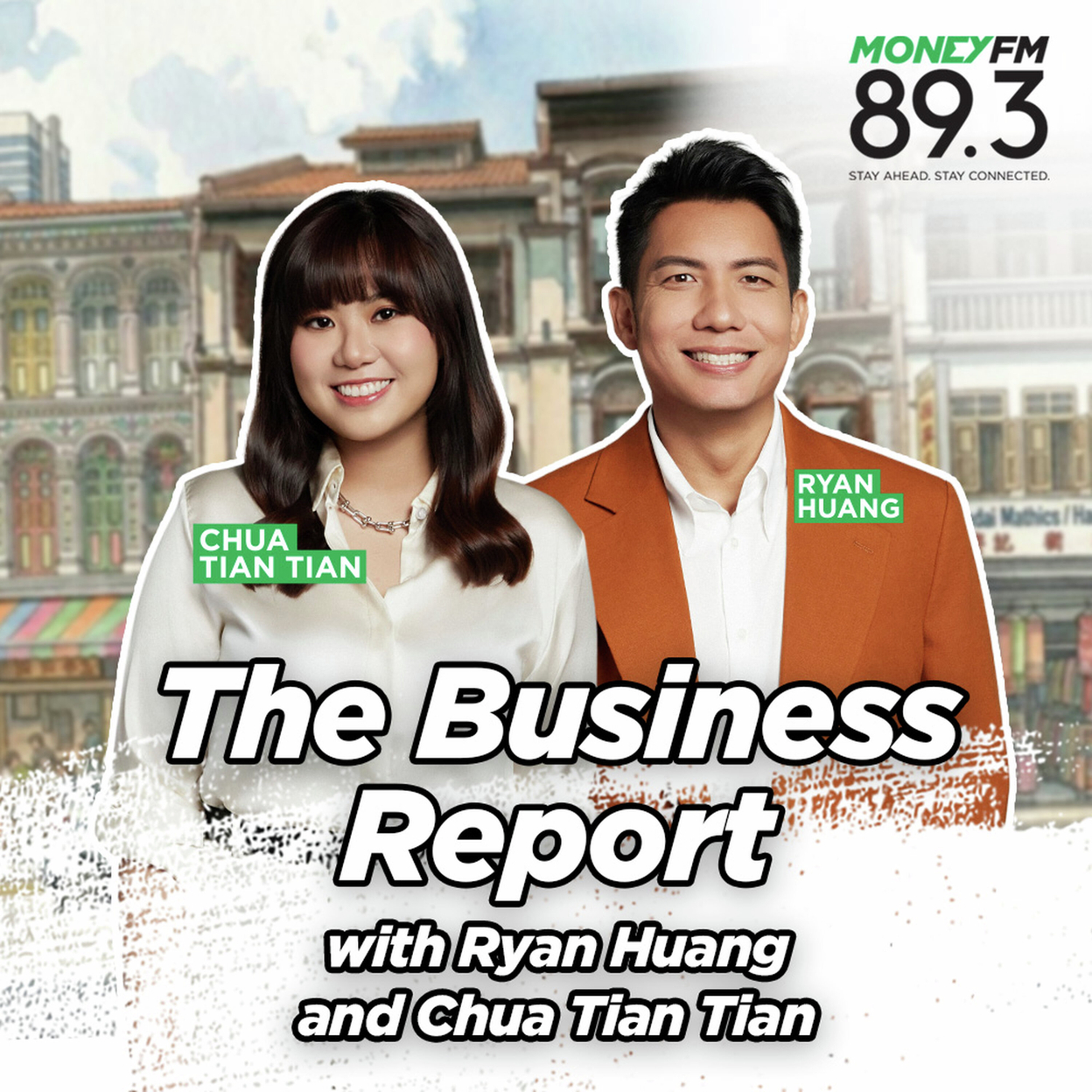
The Business Report
Ryan Huang, Chua Tian Tian
Navigate the fast-moving world of finance and industry with The Business Report. In a concise daily breakdown, we cut through the noise to bring you the stories shaping the global economy and Singapore’s business landscape. From Wall Street trends to major corporate developments, we track what’s moving markets and driving the real economy. Whether you're managing a portfolio or keeping an eye on industry shifts, The Business Report delivers the facts, the context, and the bottom line. Every hour at half past, from 9:30 am to 7:30 pm. The Business Report: Getting you to the bottom line.
Saturday Mornings
Glenn van Zutphen
Start your weekend right with Saturday Mornings for sharp commentary on the stories that matter — without losing the lighter side of the weekend. Informative, conversational, and always relevant — Saturday Mornings with Glenn van Zutphen, only on MONEY FM 89.3.
老总 Group Chat
96.3HaoFM
星期一至五早上7时15分邀请华文媒体集团“老总”上节目,分享他们对于新闻时事的观点和见解
早报播客
Lianhe Zaobao
早报播客:https://www.zaobao.com.sg/podcast 《老总Group Chat》每周一至五早上7时15分于96.3好FM播出,邀请新加坡报业控股华文媒体集团旗下各大中文报章的总编辑、主任等“老总”上节目,与听众分享他们对于新闻时事的观点和见解。 纵观天下,监测中国心跳,由《联合早报》副总编辑韩咏红主持的国际时事播客《东谈西论》,每周探讨国际热点话题,分析国际时政动态。每逢星期二新加坡时间晚上7时更新。 《理财万事通》播客每期为你提供你最需要知道的理财与财经知识。本节目由新加坡96.3好FM DJ王德明主持,《联合早报》财经专栏记者将在节目上与你分享既专业又易懂的财经知识。 《有客到》是一档深度人物专访栏目,每期邀约莅临新加坡的新闻人物,展开面对面对话。嘉宾来自科技、艺术、学术、文学等多元领域,在从容对谈中,呈现独到见解、思想脉络与人生轨迹。
Berita Harian Singapura
Berita Harian
Podcast Berita Harian Singapura menampilkan 3 tajuk podcast - NoTapis, tBH & BHerbual. Ikuti perbincangan yang dekat dengan hati masyarakat Melayu Singapura termasuk aspirasi orang muda, isu sosial, geopolitik, kesihatan, kerjaya, sukan, budaya dan macam-macam lagi. Podcast ini dihasilkan oleh Berita Harian, SPH Media.
SG Traffic Updates
MONEY FM 89.3
Singapore Traffic Updates by MoneyFM 89.3 Check the road condition before you heads out!
Asian Insider
The Straits Times
Synopsis: Every Friday, get our distinct take on global issues with an Asian perspective, with ST’s globally-based correspondents. Produced and edited by: Fa'izah Sani Executive producer: Ernest Luis A podcast by The Straits Times, SPH Media.
整点新闻
96.3HaoFM
掌握每天的新闻重点,96.3好FM星期一到五早上7点到晚上7点,周末早上9点、12点、下午3上、晚上6点整点新闻。